


 Crown Win
For brand buyers sourcing custom paper packaging internationally, choosing between digital proofs and physical samples is a common procurement challenge.
Many buyers use digital proofs to save time and reduce costs, only to discover discrepancies—such as differences in paper texture, print color, embossing depth, or structural fit—after mass production begins.
Conversely, other buyers repeatedly request physical samples, which slows down project timelines and increases pre-production costs. Neither approach alone yields ideal results for cross-border custom packaging orders. Understanding the advantages and limitations of both digital proofs and physical samples helps brands strike the right balance between cost, speed, and risk.
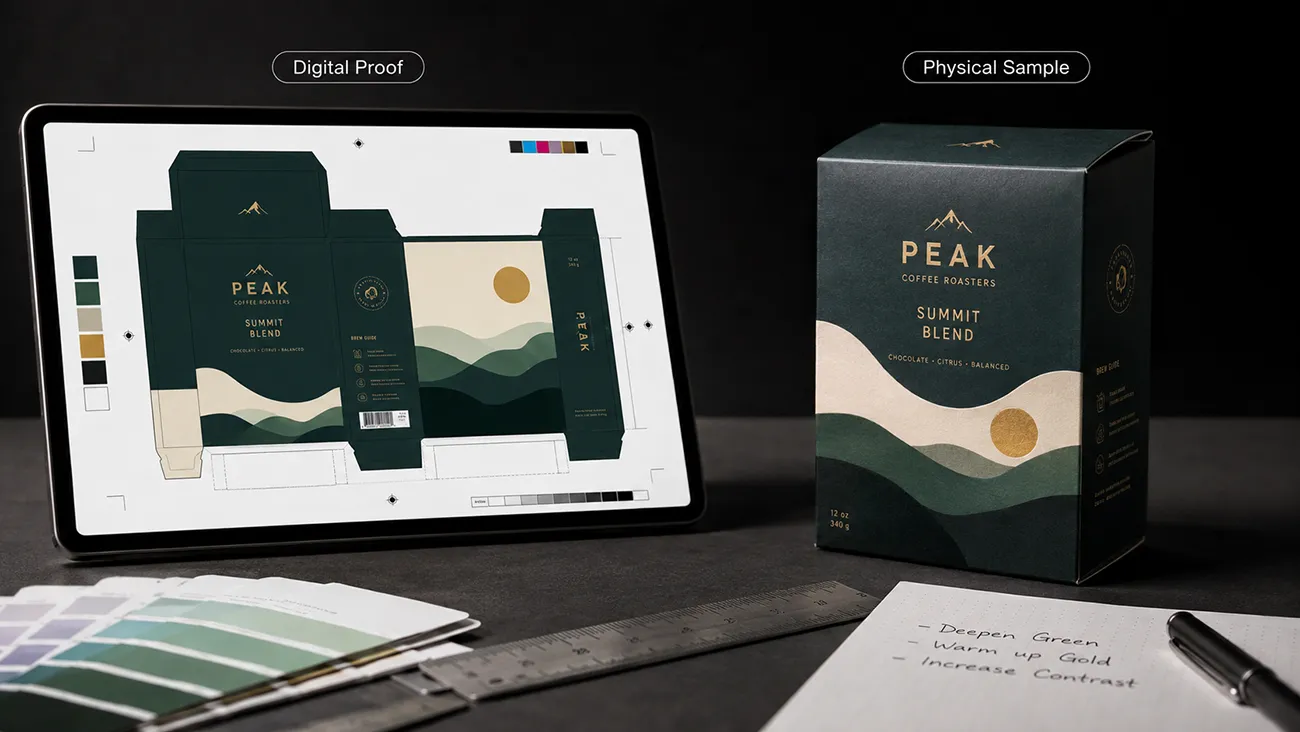
Key Differences Between Digital Proofs and Physical Samples
1. Digital Proofs: Fast, Low-Cost Visualization
Digital proofs are digital file previews of custom packaging designs, featuring 2D die-cut lines and 3D renderings.
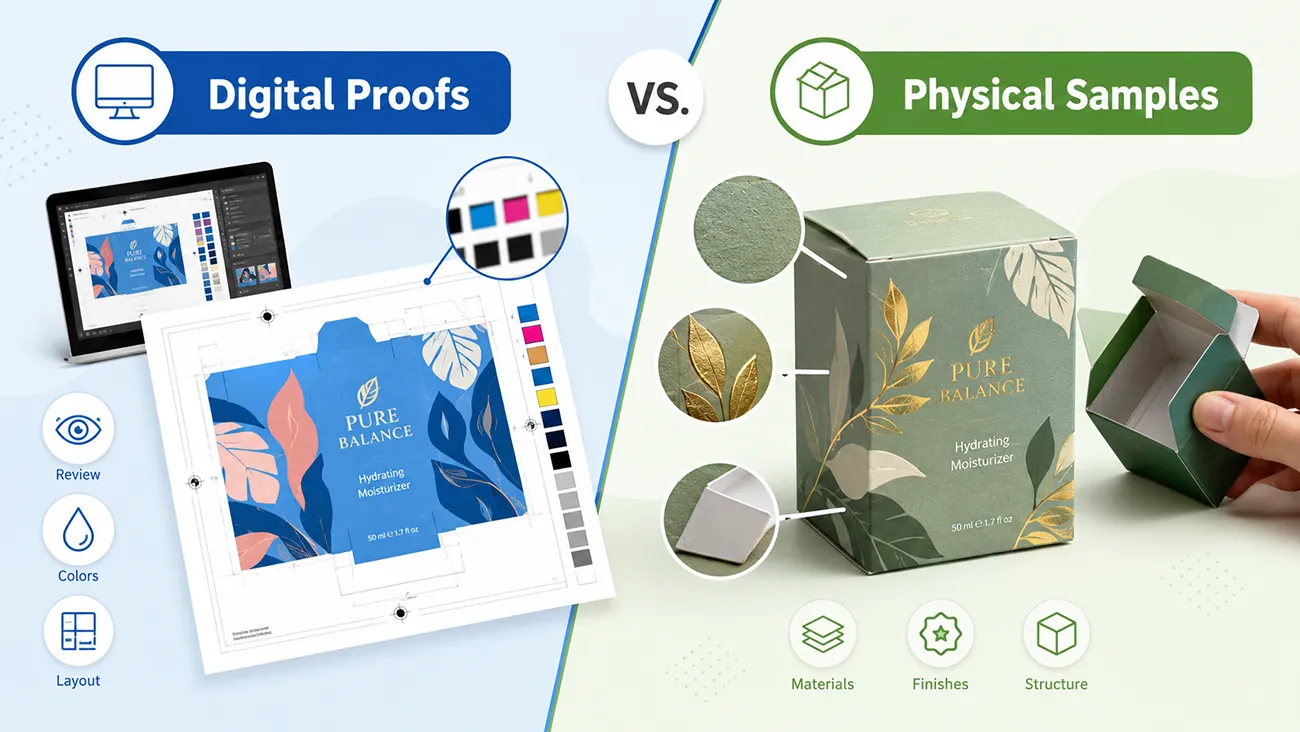
Advantages: Immediate delivery and low cost; allows for rapid iteration of graphic layouts, text revisions, and color simulations. Ideal for early-stage design approval, especially for brands with tight schedules.
Limitations: Cannot replicate actual paper texture, foil stamping effects, embossing depth, folding tolerances, or the precise fit of the actual box dimensions. Screen color deviation is a common issue, particularly for cosmetics and gift packaging destined for the EU market. Digital proofs cannot test compression performance during logistics or material compliance with regulations like the PPWR.
2. Physical Samples: Verification of Real-World Performance
Physical samples are paper boxes that have been printed, die-cut, and assembled using actual production materials.
Advantages: Accurately demonstrates the paper's tactile feel, surface finish, color output, structural stability, and fit for the product inside. Essential for verifying export compliance, simulating drop tests, and securing final approval before mass production. Helps avoid costly rework on large-volume orders.
Limitations: Longer production lead times; incurs additional costs for sampling and shipping. Multiple rounds of physical prototyping can delay the overall delivery schedule. Offers less flexibility for frequent graphic revisions.
Choosing the Right Approach for Custom Packaging Projects
1. Opt for Digital Proofing: Use this for early-stage graphic adjustments, layout modifications, and structural optimization of die-cut lines. Digital proofs help lock in the design direction before proceeding to physical prototyping. It is ideal for small-batch custom packaging projects that require rapid iteration.
2. Opt for Physical Samples: Use these to confirm final colors, surface finishes, box assembly, and export compliance. For cross-border shipments, requesting physical samples prior to mass production is crucial to avoid customs issues or defects in the final batch.
3. Best Practice Workflow: Digital proofing for design iteration → Physical samples for final validation. This approach minimizes unnecessary costs while significantly reducing risk for the buyer.
Real-World Client Case Study
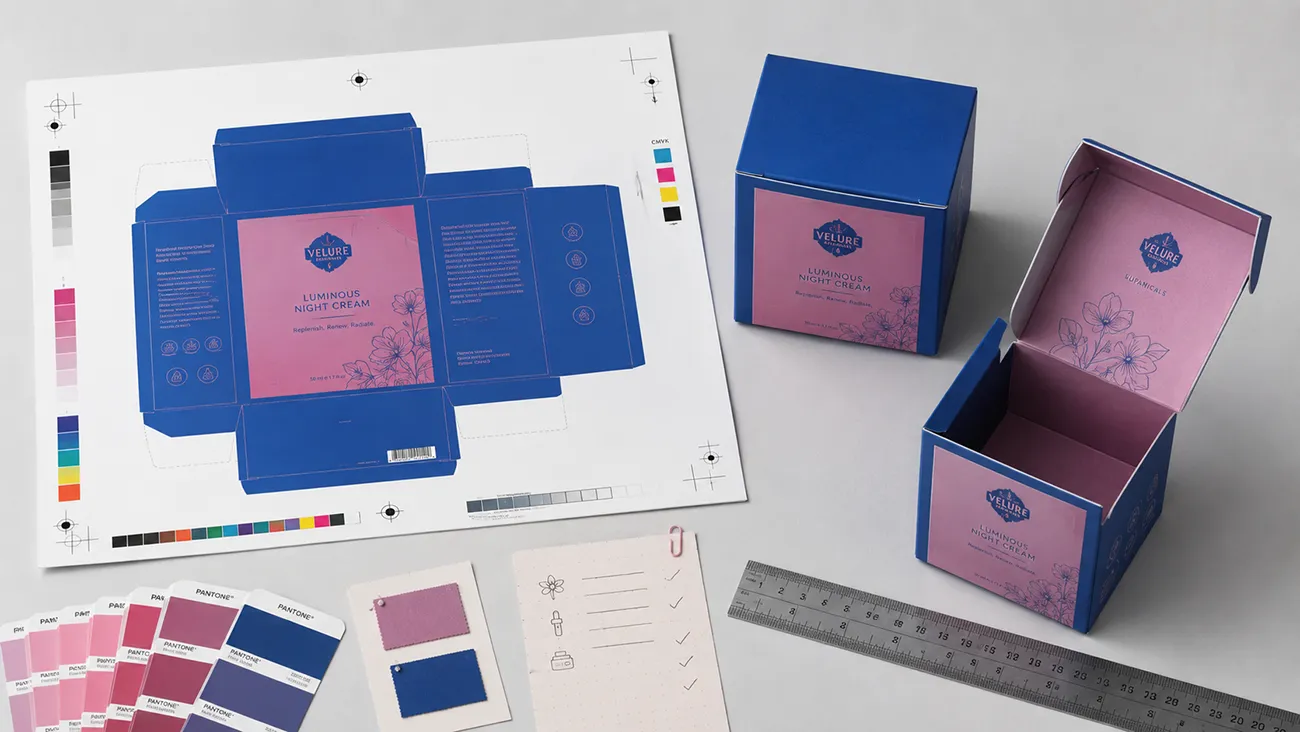
A UK-based beauty brand commissioned custom rigid gift boxes for a new skincare line. To shorten lead times, the brand initially approved the entire order based solely on 3D digital proofs, skipping physical sample confirmation. After mass production, they discovered the hot-stamping effect fell short of expectations, and the paper thickness made it difficult for the boxes to close fully. Reworking the order would have jeopardized their peak holiday sales season.
The brand then turned to Crown Win Packaging. Our team first provided revised digital proofs—adjusting both graphics and structure—followed by a pre-production physical sample created using the exact materials and processes intended for the final run. Once the client approved the physical sample, we proceeded to mass production. The final products matched the sample perfectly, met EU recyclability standards, and shipped on time, ensuring the successful launch of their marketing campaign.
Crown Win Packaging: Manufacturing Capabilities
As an export-focused **custom paper packaging manufacturer**, we incorporate both digital proofing and physical sample production into our standard pre-production workflow. This addresses key buyer pain points such as color discrepancies, structural mismatches, sample delays, and export compliance risks.
Rapid Digital Proofing Service: We provide quick feedback via 2D die-cut layouts and 3D renderings, facilitating design modifications and supporting frequent graphic adjustments during the early stages of a project.
Standard Physical Sampling Service: Samples are produced using the actual paper stock and surface finishing techniques intended for mass production; we validate the structure, print quality, and EU packaging compliance during the sampling phase. Flexible Order Handling: Supports both small-batch custom packaging and mass production, with strict end-to-end quality control.
Export-Oriented Workflow: Optimized prototyping-to-production cycles that eliminate waste from redundant prototyping and ensure the timely delivery of cross-border orders.
Conclusion
Digital proofs and physical samples each serve distinct purposes in custom packaging. Digital proofs offer speed and flexibility during the design phase, while physical prototypes validate actual craftsmanship, materials, and export compliance. Relying on only one method could introduce risks to your packaging orders.
For upcoming custom packaging projects, we recommend a hybrid approach that combines digital and physical prototyping to balance cost, speed, and quality.
If you require reliable digital and physical prototyping services for export-grade paper packaging, please contact Crown Win Packaging. Our packaging experts will recommend the prototyping solution best suited to your brand.
 E-commerce Packaging Trends for Beauty and Gift Brands in 2026