



 Crown Win
If you operate an e-commerce, retail, or manufacturing enterprise, you may have noticed recent fluctuations in customized packaging pricing. As global crude oil prices are projected to rise significantly in 2026, most companies first think of increased fuel costs. However, oil acts like an invisible bond that tightly links every stage of the paper packaging supply chain together.
There is a common misconception among procurement managers that shifting from plastic packaging to sustainable paper packaging can completely avoid the impact of oil market fluctuations. But in reality, the pulp, paper, and printing industries are deeply interconnected with the global energy market.
As a leading Chinese custom cardboard box manufacturer, Crown Win Box Manufacturer adheres to the principle of complete price transparency. In this 2026 guide, we will analyze in detail how rising oil prices drive up paper packaging costs, and more importantly, we will explore practical strategies your business can adopt to alleviate these financial pressures.
1. Why Paper Mills Are Highly Vulnerable to 2026 Oil Price Hikes
Although corrugated cardboard and paperboard are primarily made from renewable wood fibers, converting trees into high-end packaging boxes requires enormous energy consumption.
According to the American Forest Products Association, energy costs typically account for 15% to 20% of the total operating costs of paper mills. The entire production process—from wood pulping and drying large paper rolls to operating heavy-duty die-cutting and printing machinery—relies heavily on natural gas, electricity, and petroleum-related energy sources.
When the benchmark price of Brent crude oil rises, energy surcharges are immediately transferred from paper mills to packaging processors. Industry data shows that for every 10% increase in oil prices, corrugated cardboard raw material prices will rise by 2% to 4% within a single quarter. With 2026 projections indicating potential 15-20% oil price increases due to geopolitical tensions and supply constraints, packaging buyers should prepare for corresponding cost adjustments.
2. Hidden Petroleum-Based Costs in Paper Packaging Production
Custom paper boxes are much more than just paper. To transform flat cardboard into sturdy, durable, moisture-resistant, and aesthetically pleasing custom packaging, multiple chemical materials are required—many of which are petroleum derivatives:
Adhesives: High-speed folding machines use specialized adhesives to bond heavy-duty shipping boxes. Both starch-based and synthetic adhesives rely heavily on fossil fuels for their synthesis and transportation.
Printing Inks: Whether your packaging uses flexographic, offset, or digital printing, modern industrial inks contain chemical solvents, pigments, and carriers derived from petrochemical raw materials.
Protective Coatings: To protect products from moisture during shipping, many custom packaging boxes use water-based or UV protective coatings. When crude oil prices surge, the cost of these essential protective coatings increases proportionally.
In 2026, these hidden chemical costs are expected to contribute an additional 3-5% to overall packaging production expenses, separate from raw paper and energy costs.
3. Soaring Freight and Logistics Surcharges: The Biggest 2026 Cost Driver
Oil price fluctuations have the most significant, fastest, and most severe impact on packaging budgets through transportation costs. Packaging materials are inherently bulky and space-intensive, requiring at least three separate transport stages before reaching consumer shelves:
From forests or recycling centers to paper mills (raw materials)
From paper mills to processing plants like Crown Win Box Manufacturer (paper rolls and cardboard sheets)
From our production facility to your warehouse (finished custom packaging boxes)
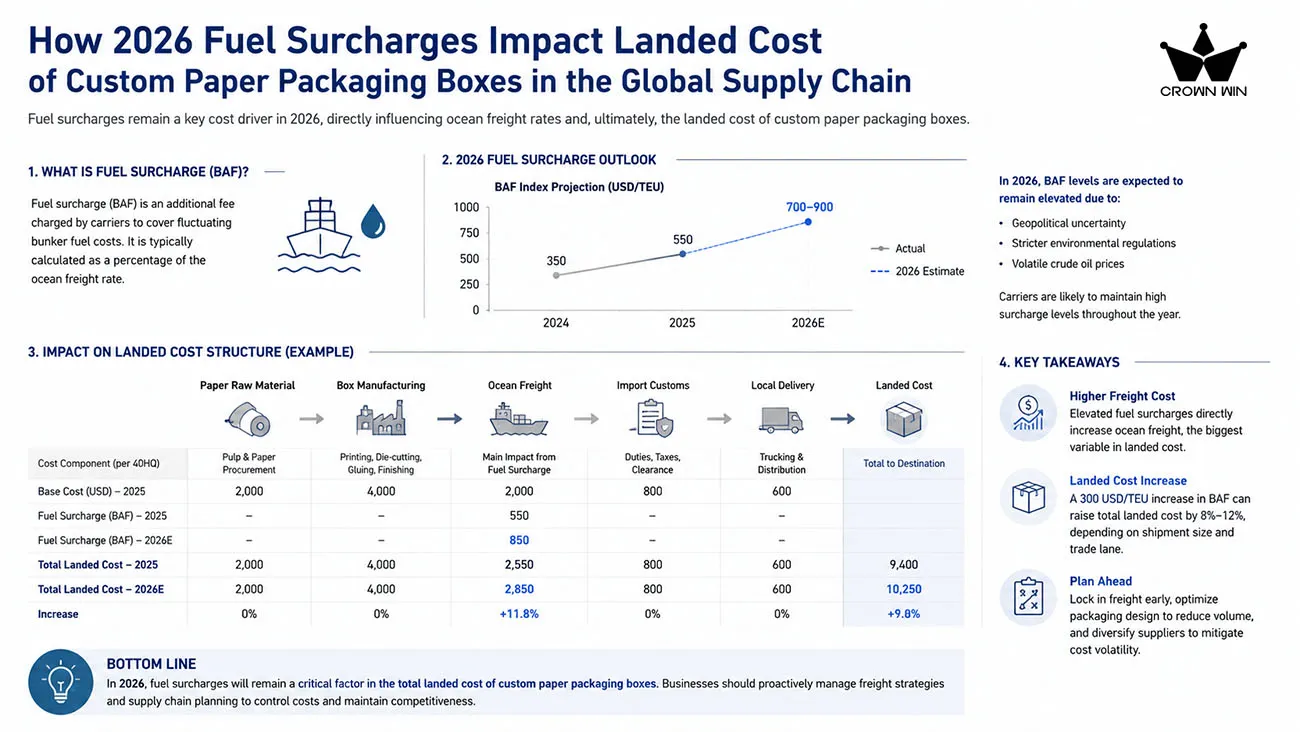
Sea freight and domestic trucking prices move almost in perfect synchronization with crude oil and diesel prices. Fuel accounts for approximately 50% to 60% of container ship operating costs. When oil markets tighten, global shipping lines and domestic freight companies immediately implement emergency fuel surcharges.
During market stability, a full container of custom packaging might cost $2,000 to ship. However, when oil supply lines face geopolitical turbulence—an increasing risk in 2026—transportation costs can easily quadruple. This makes logistics the single largest variable in your 2026 packaging budget.
Why Packaging Costs Don't Immediately Fall When Oil Prices Drop
We frequently receive customer inquiries: "Oil prices dropped this week—why hasn't my packaging quotation decreased immediately?"
The packaging supply chain operates with a significant lag, typically 3 to 6 months behind crude oil price fluctuations. When oil prices rise, manufacturers absorb the impact until their low-cost raw material inventories are depleted before passing on increases. Conversely, when oil prices fall, manufacturers are still processing raw materials purchased at peak prices.
Additionally, long-term supplier contracts and rigid production planning cycles further delay price reductions, resulting in temporary price stagnation. This means that any 2026 oil price increases will likely affect your packaging costs well into 2027.
3 Proven Strategies to Reduce 2026 Packaging Costs Amid Oil Price Volatility
While companies cannot control global macroeconomic factors, you can control your packaging design and procurement strategies. Here's how Crown Win Box Manufacturer helps brands withstand the cost pressures of 2026 energy market fluctuations:
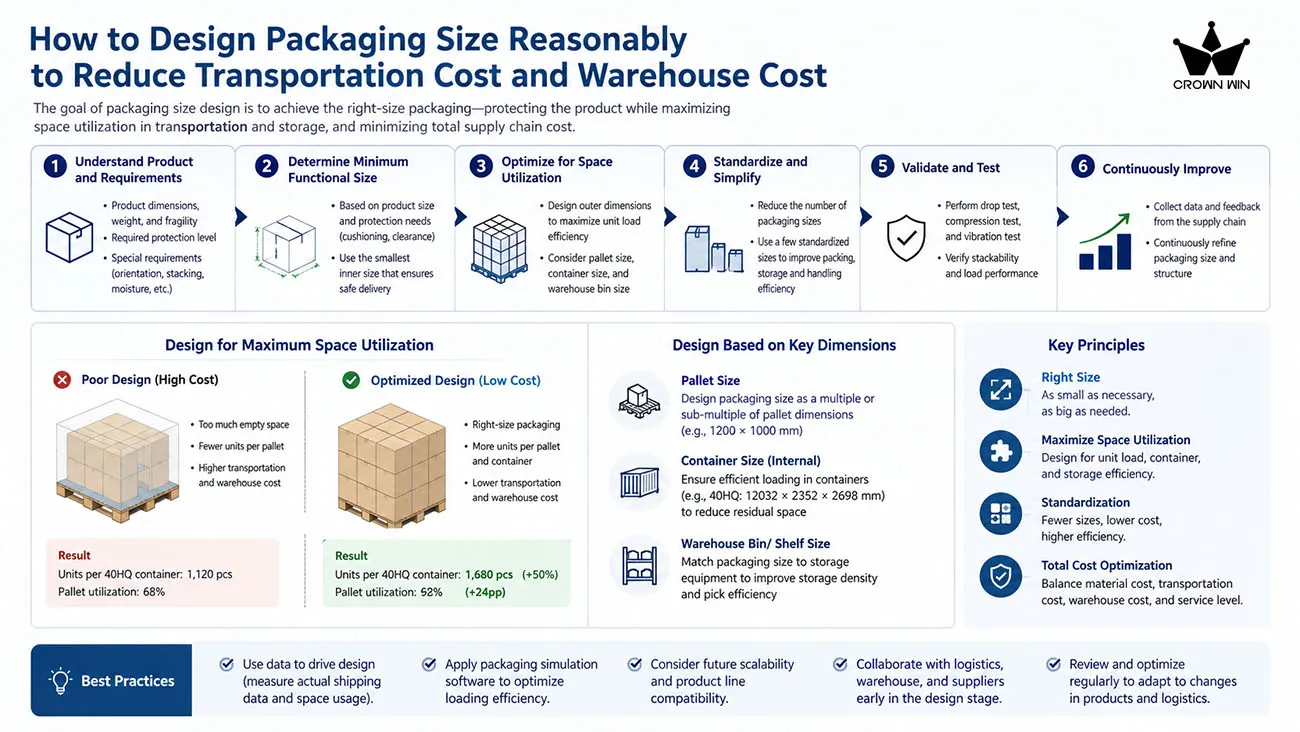
1. Optimize Packaging Dimensions for Maximum Efficiency
Many brands use boxes that are one inch or more larger than actually needed. By optimizing your custom gift boxes or corrugated mailers to perfectly fit your products, you can:
Minimize material consumption by up to 15%
Reduce overall shipping volume
Significantly lower fuel surcharges
Decrease void fill requirements
Our structural design team specializes in creating right-sized packaging that maintains product protection while eliminating waste.
2. Implement Strategic Batch Ordering with Flexible Warehousing
Frequent small orders often result in additional freight penalties for multiple small-batch shipments. Instead, consider consolidating your annual packaging requirements into larger production runs.
Crown Win Box Manufacturer offers free flexible warehousing solutions that allow brands to:
Lock in lower material prices before 2026 oil price increases take full effect
Produce in bulk to reduce per-unit manufacturing costs
Ship only what you need, when you need it
Avoid inventory storage costs at your facility
3. Advanced Structural Design to Reduce Material Weight
Our engineering team focuses on optimizing die-cut line layouts to minimize cardboard waste during production. By using innovative folding techniques to build structural strength—rather than relying solely on thicker, heavier paper materials—we can:
Reduce overall packaging weight by 10-20%
Lower per-pallet shipping costs
Maintain or improve product protection
Decrease your carbon footprint
This approach is particularly effective for mitigating 2026 freight cost increases, as lighter packages translate directly to lower fuel surcharges.
Frequently Asked Questions About 2026 Oil Prices and Paper Packaging
Q: Will switching to 100% recycled paper packaging protect me from oil price increases?
A: While recycled paper has lower raw material costs, it still requires the same energy-intensive manufacturing processes and petroleum-based chemicals as virgin paper. However, recycled packaging can reduce overall costs by 5-10% compared to virgin alternatives.
Q: How far in advance should I lock in 2026 packaging prices?
A: We recommend locking in prices 3-6 months before your peak season to avoid mid-year oil price spikes. Early booking also ensures production capacity during busy periods.
Q: Are there any packaging materials completely unaffected by oil prices?
A: No packaging material is entirely immune to oil price fluctuations, as all require transportation and some form of energy for production. However, paper packaging is generally less affected than plastic packaging, which is made directly from petroleum.
Partner with Crown Win for 2026 Packaging Cost Stability
In the ever-changing market environment of 2026, choosing the right packaging partner is more critical than ever. At Crown Win, we combine advanced structural engineering technology with lean manufacturing principles to provide cost-effective, high-quality paper packaging solutions that properly protect your products while safeguarding your profit margins.
Our team of packaging experts stays ahead of global energy market trends to help you plan and budget effectively. We offer transparent pricing, flexible production options, and innovative design solutions that minimize the impact of oil price volatility on your bottom line.
Contact our team today for a free comprehensive packaging audit and discover how we can optimize your box designs to help you effectively address the increasing supply chain cost challenges of 2026 and beyond.
 5 Tips to Optimize Packaging Boxes and Reduce Transportation Costs by Up to 20%