



 Crown Win
Collapsible rigid boxes combine the premium feel of rigid box materials with a collapsible structure: they can be shipped and stored flat, then assembled and secured right before use. For beauty, skincare, and gift brands concerned with shipping volume and storage space, this structural option is worth considering for their packaging strategy.
Determining whether they are more cost-effective than pre-assembled rigid boxes requires looking beyond the box style itself; one must also compare packed quantities (in the collapsed state), shipping cost calculations, assembly labor time, and actual sample performance.
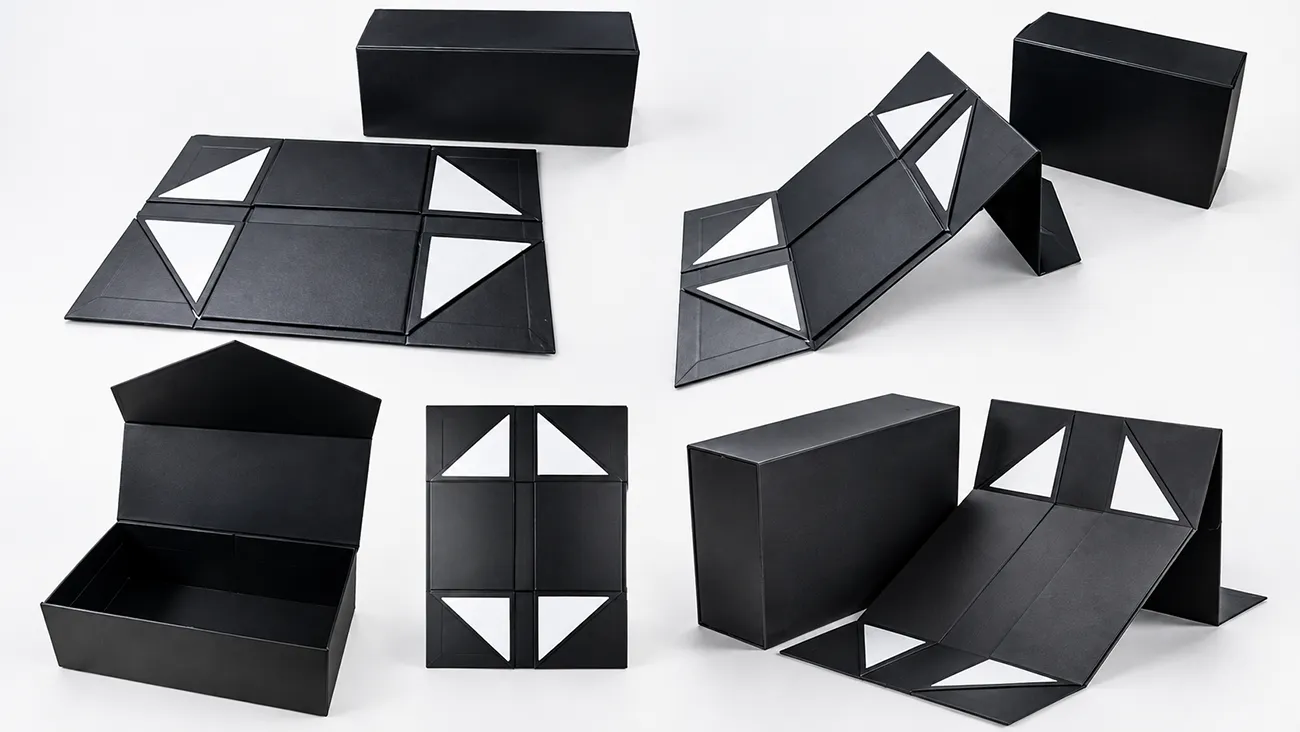
What Is a Collapsible Rigid Box?
Collapsible rigid boxes are typically constructed from rigid paperboard, utilizing fold lines and connecting structures to enable collapsibility. Once assembled, they offer the three-dimensional appearance and premium tactile quality of a standard rigid box. Depending on the design, they may be secured using magnetic closures, interlocking mechanisms, or pre-applied adhesive strips; specific assembly methods should be verified against samples and assembly instructions.
They differ from standard folding cartons in terms of structural design and the presentation of the finished product; they differ from pre-assembled rigid boxes in their ability to be collapsed and stored flat during shipping and warehousing.
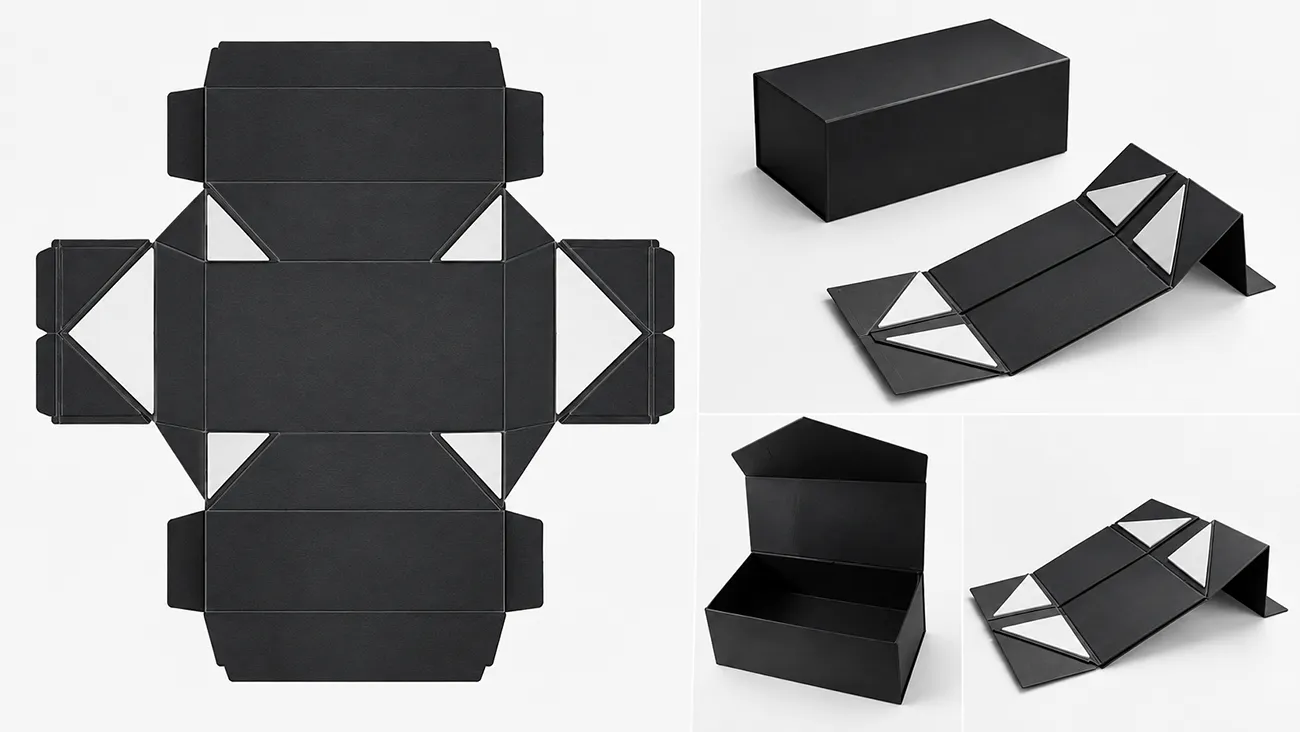
Sourcing Advantages of Collapsible Rigid Boxes
1. Reduced Shipping Volume
Collapsing the empty boxes reduces the storage space required for unfilled packaging and improves packing efficiency within shipping cartons. The actual savings depend on the collapsed dimensions, quantity per carton, outer carton specifications, shipping routes, and logistics pricing models. When requesting a quote, ask the supplier for the outer carton dimensions and packing quantity in the collapsed state to compare with pre-assembled rigid box options.
2. Preserved Display Aesthetics
Surface finishes—such as outer wrapping paper, matte or gloss effects, hot stamping, and embossing—can be evaluated based on the specific structural and material plan. Since fold lines and connection points may affect the wrapping paper and print quality, it is advisable to inspect physical samples before finalizing production specifications.
3. Suitable for Centralized Assembly or Batch Replenishment
Brands can assemble the boxes as needed, right before they are put into use. When evaluating procurement, factor in the costs associated with assembly personnel, workspace requirements, and assembly time; if every order requires on-the-spot assembly, these labor costs can impact the solution's actual profitability.
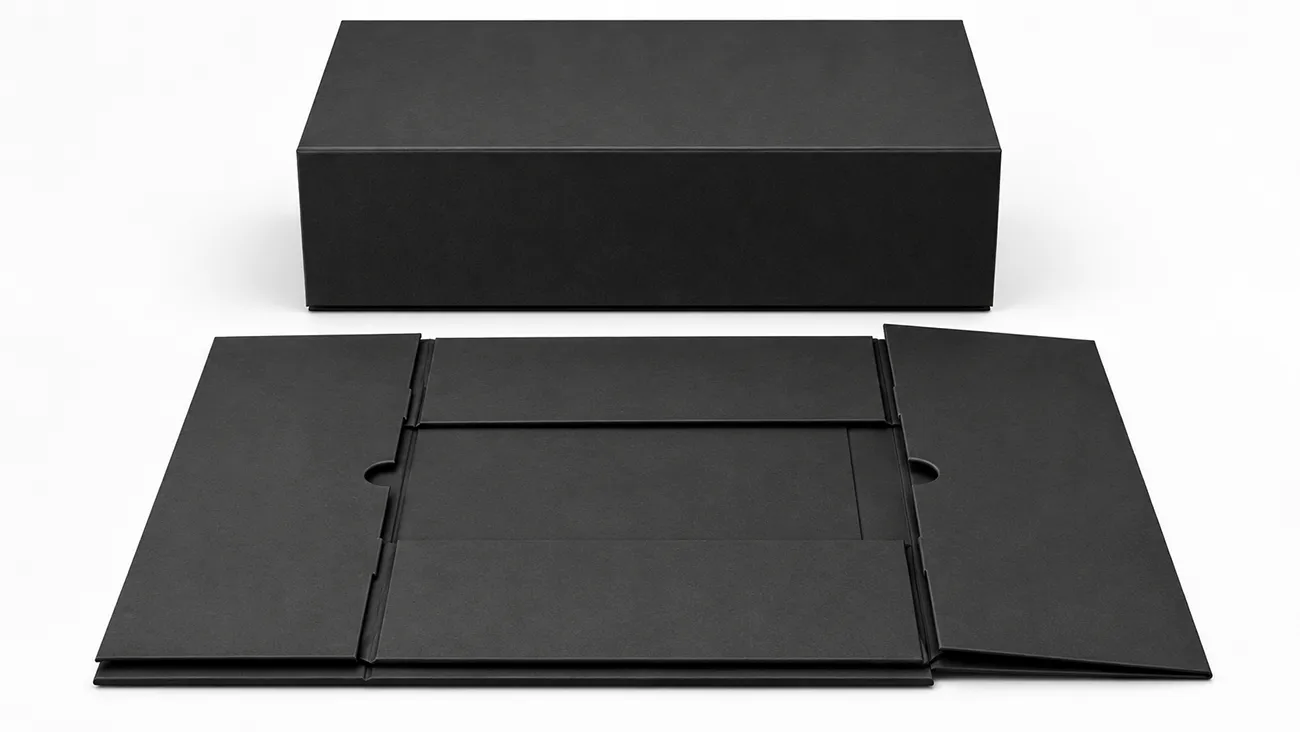
Which items are suitable for collapsible rigid boxes?
1. Gift boxes or sets for cosmetics and skincare products
2. Holiday and seasonal gift items
3. Projects where empty boxes take up significant volume and warehouse space is limited
4. Orders requiring a premium display look while also needing to optimize shipping efficiency for empty boxes
Situations requiring careful evaluation:
1. Heavy products or those requiring robust internal support
2. Boxes that must maintain a fixed shape over an extended period
3. Products involving frequent disassembly/reassembly or repeated opening/closing by the end-user
4. Cases where assembly time, folding structure, or shipping protection fail to meet operational requirements
5. Suitability should be determined by considering product weight, internal inserts, box structure, and shipping methods, rather than relying solely on the box type's name.
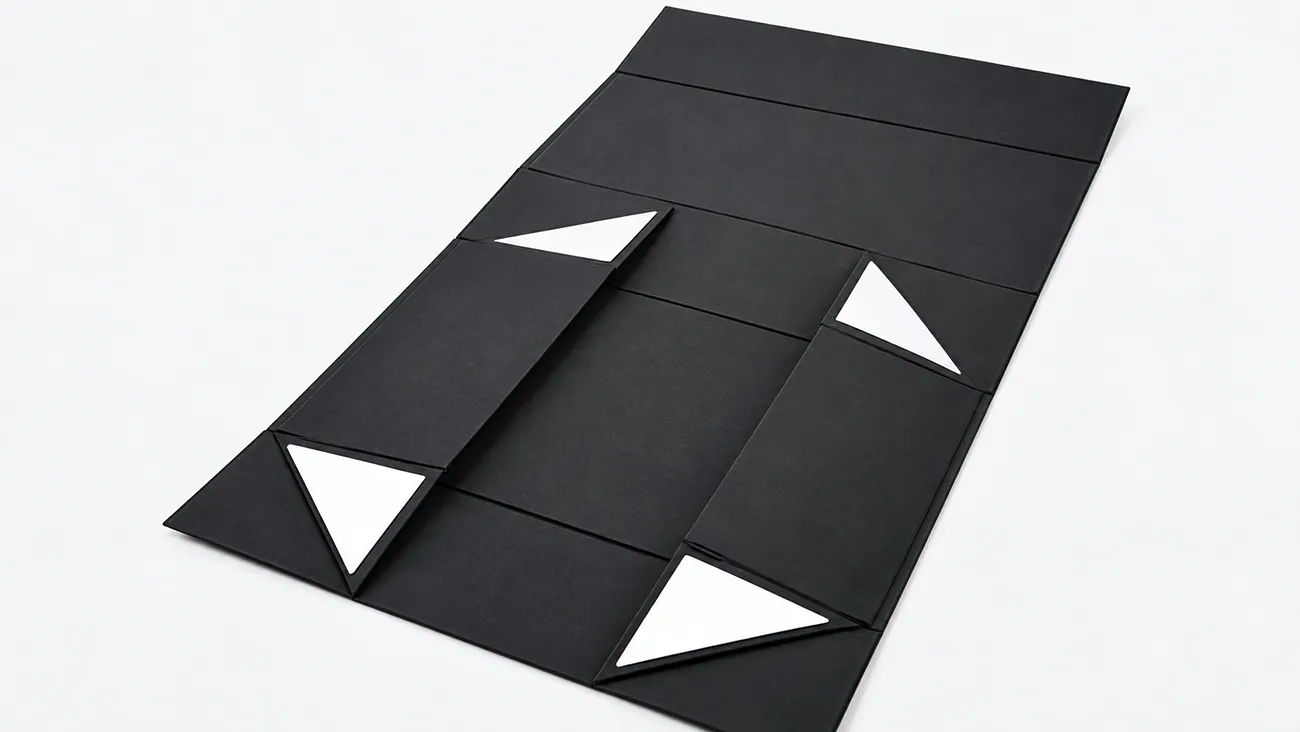
Specifications and tests to confirm before export procurement
1. Product dimensions, weight, and internal space
Provide precise data on the product's length, width, height, weight, orientation, and accessories. Verify internal dimensions, clearance for inserting/removing the product, and insert placement to avoid situations where the finished box looks right externally but is too tight internally or fails to secure the product.
2. Collapsed dimensions and shipping carton data
Verify assembled box dimensions, collapsed footprint, shipping carton specifications for collapsed boxes, and quantity per carton. When comparing different box types, use consistent order quantities and shipping conditions for calculations.
3. Paperboard, fold lines, and joints
Select board materials and fold-line designs based on product weight and display requirements. Sample inspections should check for cracking at fold lines, lifting corners, wrinkling of the laminated paper, and the box's ability to maintain its intended shape after assembly.
4. Assembly and sealing methods
Confirm how the box is erected and secured, whether adhesive strips need to be removed, how the seal closes, and the specific steps required for warehouse staff. Assembly requirements vary by structure; evaluations should be based on actual samples. 5. Inserts and Transport Protection
Evaluate paper-based or other suitable inserts based on the product's shape, weight, and fragile areas. Transport testing should ideally utilize complete packaging assemblies containing the actual product, taking into account anticipated shipping and outer-carton loading conditions; inspecting empty boxes alone cannot substitute for full-case transport validation.
6. Surface Finishes and Material Documentation
Verify the specific combination of paperboard, facing paper, inks, coatings, and adhesives. If specific target markets or product-contact requirements apply, confirm the relevant standards and supplier documentation based on actual usage and contact pathways. Certifications (such as FSC) or material declarations must be cross-referenced with the materials actually purchased and their corresponding documents; the mere existence of such certifications does not guarantee that the entire packaging assembly meets all market requirements.
How to Determine if a Collapsible Rigid Box is a Worthwhile Purchase?
It is recommended to prepare the following information during the inquiry and prototyping stages:
1. Product dimensions, weight, and fragile areas
2. Estimated order volume and replenishment frequency
3. Target market and assembly location
4. Required box style, inserts, and surface finishes
5. Outer carton dimensions (in the collapsed state), pack quantity, and shipping method
6. Assembled sample and a test fit with the actual product
Evaluate samples in both collapsed and assembled states, comparing factors such as shipping volume for empty boxes, warehouse space utilization, assembly labor time, and the final visual impact. This makes it easier to determine whether a collapsible structure is suitable for the specific project.
Conclusion
Collapsible rigid boxes offer brands an option that combines the premium presentation of rigid boxes with the shipping efficiency of flat-packed packaging. Whether they reduce total project costs depends on the specific structure, outer-carton loading efficiency, storage conditions, and assembly labor requirements. Examining both collapsed and assembled states during prototyping helps identify structural or operational issues before mass production begins.
To evaluate Crown Win Packaging’s custom collapsible rigid box solutions, please provide product dimensions, weight, order volume, target market, and insert requirements to facilitate discussions regarding structure, samples, material documentation, and quotations. MOQs, sample arrangements, and lead times are subject to confirmation based on the specific project.
If you are comparing different rigid box structures, you may also want to read our articles on magnetic rigid boxes for beauty brands.
 Lid and Base Gift Boxes: A Classic Packaging Structure