



 Crown Win
A necklace can look perfectly arranged in a jewelry box and still arrive tangled. A fine chain can slip out of a wide slot, and a heavy pendant can pull the chain loose when the parcel turns over. A custom jewelry box insert should control three things: the path of the chain, the position of the pendant and the space between the jewelry and the lid.
Measure the necklace before choosing an insert
Send your packaging supplier the full chain length, chain thickness, clasp size, extender length and pendant dimensions. Include the height of any raised stone or setting, plus the pendant weight if it is substantial. Photograph the piece laid flat beside a ruler and show how you want it to look when the box opens.
If several styles will share a box, start with the thinnest chain, the bulkiest clasp and the tallest or heaviest pendant. These may be three different samples. Ask for the usable space above and below the insert in the assembled box. This guide to internal box dimensions explains what to check on a drawing and a physical sample.
Choose how the insert will hold the chain and pendant
Slotted paperboard for a slim, lightweight necklace
Two shoulder slots can set the display position. Route excess chain behind the card and give it a pocket or a retaining tab, so it stays away from the pendant and clasp. Check that the narrowest chain stays in its slots when the box is turned over and releases smoothly during unboxing. Inspect the cut edges where they touch plated or polished surfaces.
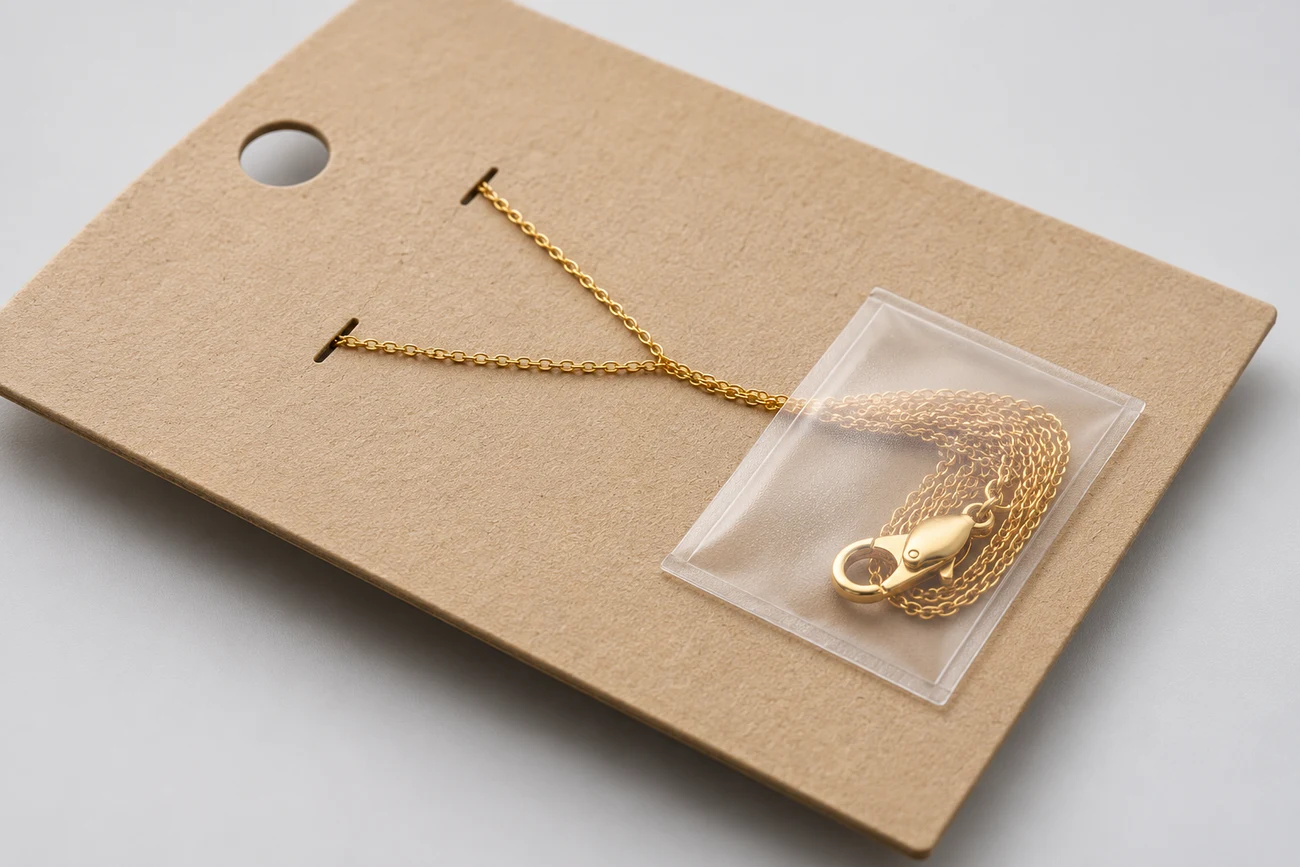
Figure 1. Two slots guide the chain through the kraft card. A clear pocket on the back holds the excess chain and clasp away from the pendant.
Recessed foam or a formed tray for a raised pendant
A shaped recess can support a thicker pendant and limit sideways movement. Keep the chain secured separately so the pendant cannot pull it free. Check whether the pendant sits above the insert, whether it rocks in the recess and whether a protruding setting touches the lid. Ask for a sample using the proposed production material and surface finish, since both affect how the piece sits and releases.
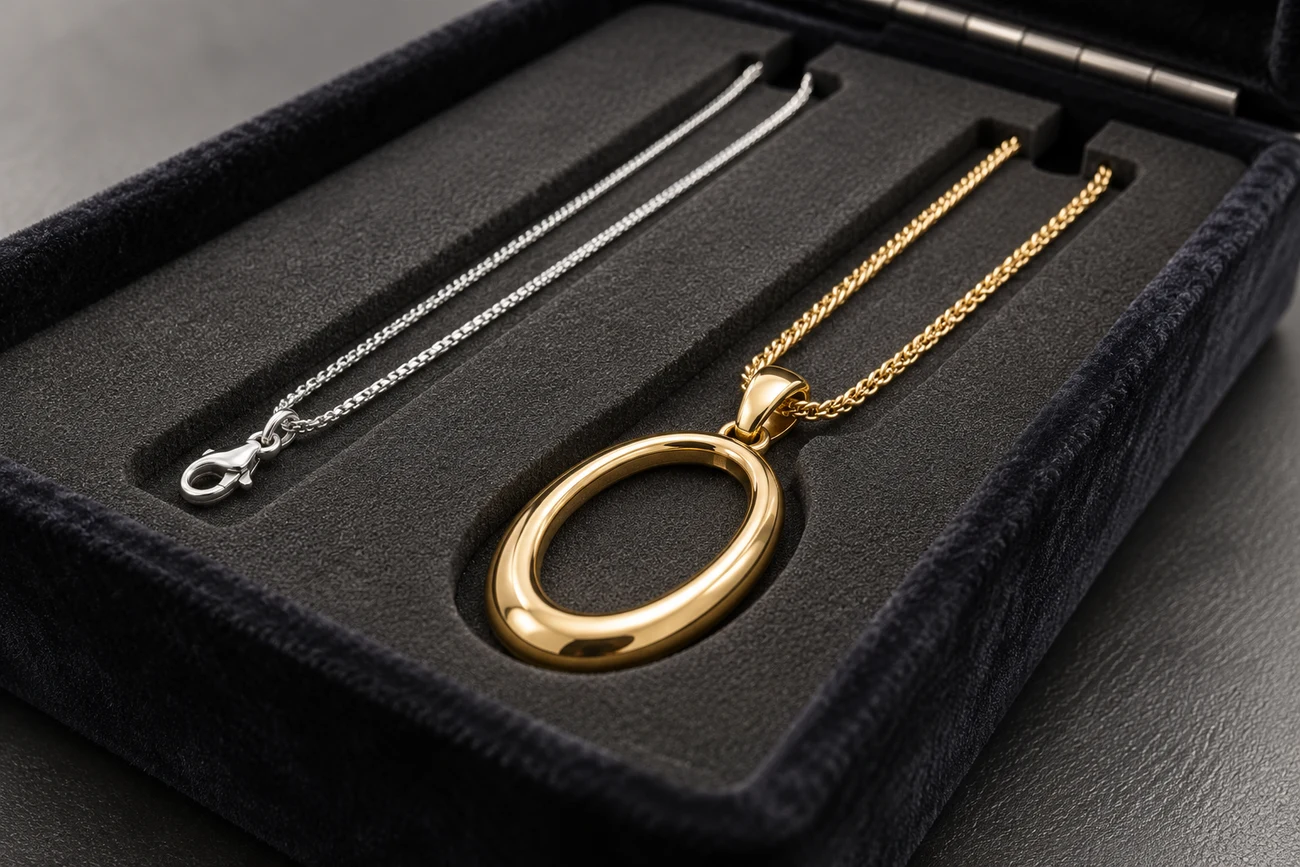
Figure 2. A fitted foam recess holds the gold pendant in place. Separate channels keep the two necklaces apart.
Review the available jewelry box styles or see a custom necklace box with a fitted insert. Confirm the retention layout with your own jewelry before approving a style.
Check the sample in the box you will actually ship
- Pack each test piece. Have someone follow the intended packing steps. Check that they can secure the clasp and extra chain without forcing the insert or bending the jewelry.
- Close and reopen the box. Check for resistance, pressure marks, rubbed surfaces and contact between the lid and any raised setting. Look underneath the insert for a clasp trapped between the insert and the box base.
- Check for movement. Pack the jewelry box in the planned mailer with the intended cushioning. Gently turn the parcel through its normal handling orientations, then open it and inspect the chain, pendant and insert. Compare before-and-after photos and record which samples moved or lifted out of their slots.
- Approve the packing method with the sample. Record where the chain tail goes, which pendant orientation to use and the insert material and revision. If your retailer or shipping program specifies transit testing, arrange that separately for the complete shipping pack.
Frequently asked questions
How do I secure a very fine necklace chain?
Trial narrow retaining slots or tabs sized to the actual chain, with a separate place for the tail and extender. Try packing and removing the smallest chain several times and check that it neither slips free nor catches on the edge.
What measurements matter most for a thick pendant?
Measure the maximum height from the back to the highest point of the pendant, including any setting or bail that sits above it. Check the recess depth and closed-lid clearance with the product installed. Include weight and shape when deciding how much support the recess needs.
Can different necklace styles share one insert?
Yes, if the slots hold the full range of chain sizes and the pendant area works for every piece. Test the smallest chain and the largest pendant first. If one style needs a different recess or chain path, ask whether the same outer box can use two insert layouts.
Request a quote for custom necklace packaging
Send product photos, chain lengths, clasp and pendant dimensions, the number of styles, estimated order quantity by style and your preferred box format. If the box will ship direct to customers, include the outer mailer dimensions or tell us how you plan to ship it.
Request a custom jewelry packaging quote from Crown Win
 Custom Tear Strip Mailer Boxes: How to Choose the Right Design