


 Crown Win
A gift set can look neatly organized with a dedicated cavity for every item—until a bottle changes size or a new accessory joins the kit. If the product mix may change, the insert should reflect which items need a precise position and which can fit in a more adaptable space.
A flexible gift-set insert does not mean leaving every item loose. It means planning the layout around the products that must stay secure while allowing for reasonable changes elsewhere. The box, insert and actual products should be reviewed together before production.
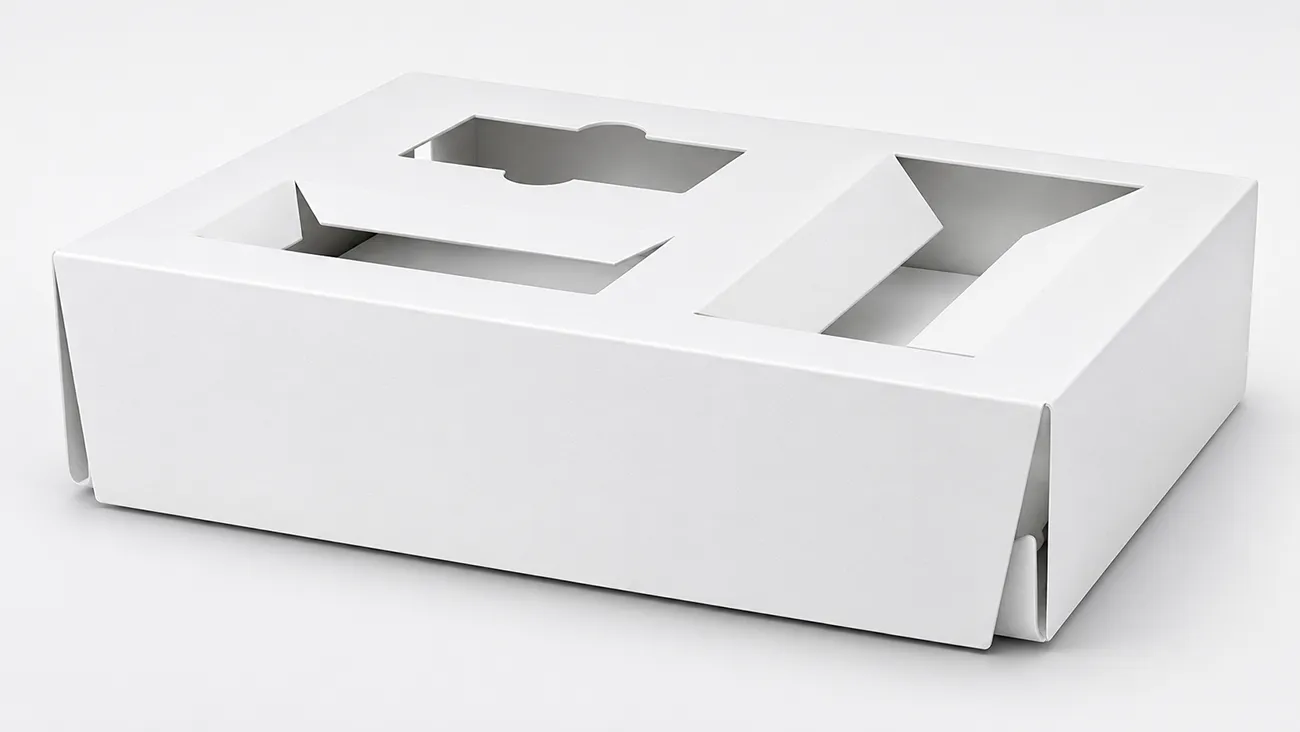
Separate fixed items from products that may change
Start by listing every item in the current kit. Mark which products are essential to the set and likely to remain, and which may change in size, quantity or type.
For each item, note:
1.Packed dimensions, including caps, closures and protective wraps
2.Weight and any fragile areas
3.Whether the item needs to stay upright or face a particular direction
4.Whether it may be replaced by a different product in a future version
This list helps identify where a close-fitting cavity is useful and where a little more flexibility may be needed. If product dimensions are not final, label them as estimates instead of treating them as production measurements.
Decide what needs a dedicated position
Some products need a defined position to protect a fragile part, prevent movement or create a clear presentation. These items may need a fitted cavity or another form of support designed around their shape.
Other items may be more suitable for a shared compartment, especially if their size and quantity can vary. However, an open space should not let heavier products move into lighter or fragile items. Consider how each item will be supported and separated during normal handling.
The goal is to identify the “fixed” part of the kit first. Then plan the remaining space around the products that may change.
Consider a hybrid insert layout
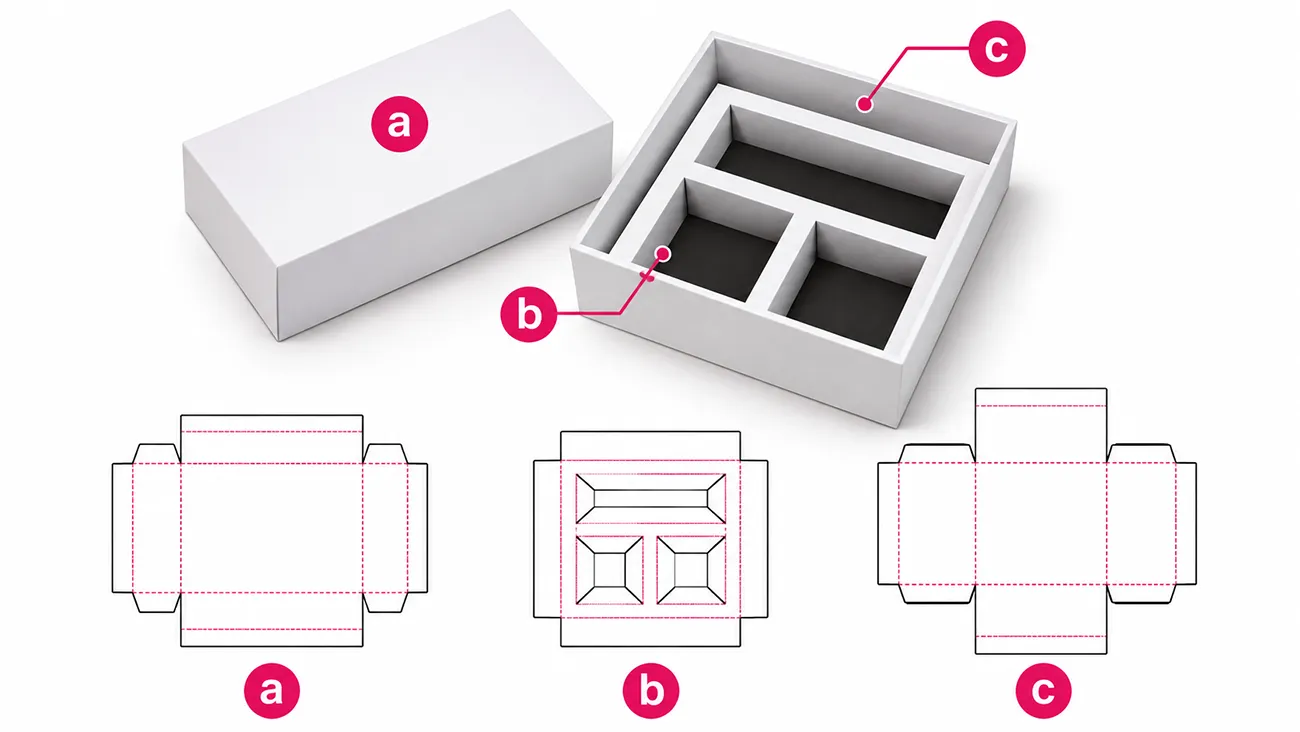
A hybrid layout combines dedicated positions for priority products with a more open area for items that may vary. For example, a skincare gift set might keep a gua sha tool in its own slot while placing several skincare products in a shared compartment.
This approach can make a changing kit easier to update, but the open area still needs a defined minimum size and packing plan. Depending on the products, a divider or other separation may be useful. Ask the supplier which insert structures can be made for the project and confirm the available materials and construction before treating a concept as a production option.
Crown Win’s customization page lists insert options such as cardboard, paper tray, EVA and other insert types. The appropriate structure and material should be confirmed for the specific products and protection requirements.
Design around the likely range of product changes
Do not plan only for the current version if the kit is expected to change. Define the realistic range of products that may use the insert. This could include a larger bottle, an extra item, or a different combination of products.
Ask:
1.What is the largest item the space may need to hold?
2.Will the number of items change?
3.Could the replacement item be heavier or more fragile?
4.Will new products need individual separation?
5.Does a change affect the box size or only the insert?
These decisions help the supplier judge whether the current box can remain the same or whether the structure needs to be reconsidered. A flexible insert cannot accommodate every possible product without limits, so set clear boundaries for the kit variations.
Test the layout with the actual products
A drawing can show the proposed arrangement, but it cannot confirm how easy the kit is to pack or whether products remain stable in the finished box. When possible, review a sample with the actual products and any sleeves, pouches or protective wraps that will be used.
During the review, check that:
Each product fits in its intended position.
1.Dedicated cavities hold the priority items without pressing on fragile details.
2.The open compartment can accommodate the expected product combinations.
3.Products do not collide or shift into one another during normal handling.
4.The box closes properly with the complete kit inside.
5.Packing and unpacking are practical for the intended process.
If the final product mix is not ready, agree which versions the sample represents and which combinations still need to be checked before production.
A buyer inquiry: one fixed tool and changing skincare items
In an anonymized U.K. inquiry, a buyer planning a skincare set wanted a magnetic presentation box. The gua sha tool needed its own position, while the other skincare products could sit together in a shared compartment. The first order was expected to be modest, and the product mix might change later.
A fully divided insert with a separate slot for every item could make those later changes harder. A layout with a dedicated position for the tool and a defined shared compartment was a concept worth reviewing—but the products still needed to be tested in the proposed insert.
This example is based on an anonymized buyer inquiry. It describes a design consideration, not a confirmed production result or universal insert solution.
What to include in an insert brief
When requesting an insert layout, provide:
1.A complete list of current kit contents
2.Packed dimensions and photos of each item
3.Which items are fixed and which may change
4.Expected size or quantity range for variable items
5.Fragile areas and required product orientation
6.Any sleeves, pouches or protective wraps
7.Preferred box style and internal dimensions, if known
8.How the kit will be packed and presented
9.Target order quantity and possible future versions
If the future product range is uncertain, explain what is known and mark the rest as provisional. This gives the supplier a clearer basis for proposing a layout and identifying what needs sample validation.
Frequently asked questions
What is a flexible gift-set insert?
It is an insert layout that secures priority products while allowing defined space for items that may vary. The amount of flexibility depends on the product sizes, weights, protection needs and insert structure.
Should every item in a gift set have its own cavity?
Not always. A dedicated cavity can help position a specific item, but a shared compartment may suit some products that vary between kit versions. The contents still need enough support and separation to avoid unwanted movement or contact.
Can the box stay the same if the products change?
Sometimes, if the updated products still fit within the approved internal dimensions and the insert can support them appropriately. A change in product size, quantity, weight or fragility may require a revised insert, a new sample or a different box specification.
How can I confirm an insert will work?
Review a drawing for the proposed layout, then check the assembled box and insert with the actual products or agreed samples. Confirm fit, support, separation, closure and packing steps before approving production.
Plan the insert around the kit you have—and the changes you expect
Identify the products that need a precise position, define which items may vary and set realistic limits for those changes. Then test the proposed insert with the actual kit before production.
Share your current kit list, product dimensions and likely changes with Crown Win to discuss an insert layout. See the available customization options for insert and box details.
 Why Internal Box Dimensions Matter More Than the Outside