


 Crown Win
Brands sourcing multi-product sets often face common packaging challenges: products shifting and scratching against each other during transit; loose inserts failing to secure items; mismatched insert dimensions leading to wasted space and increased shipping volume; or materials failing to meet EU packaging regulations. Poor insert design can ruin the unboxing experience and increase product damage rates for gift boxes, beauty sets, and retail bundles. For brands sourcing custom inserts, a well-planned structural design protects the merchandise while enhancing the overall unboxing experience.
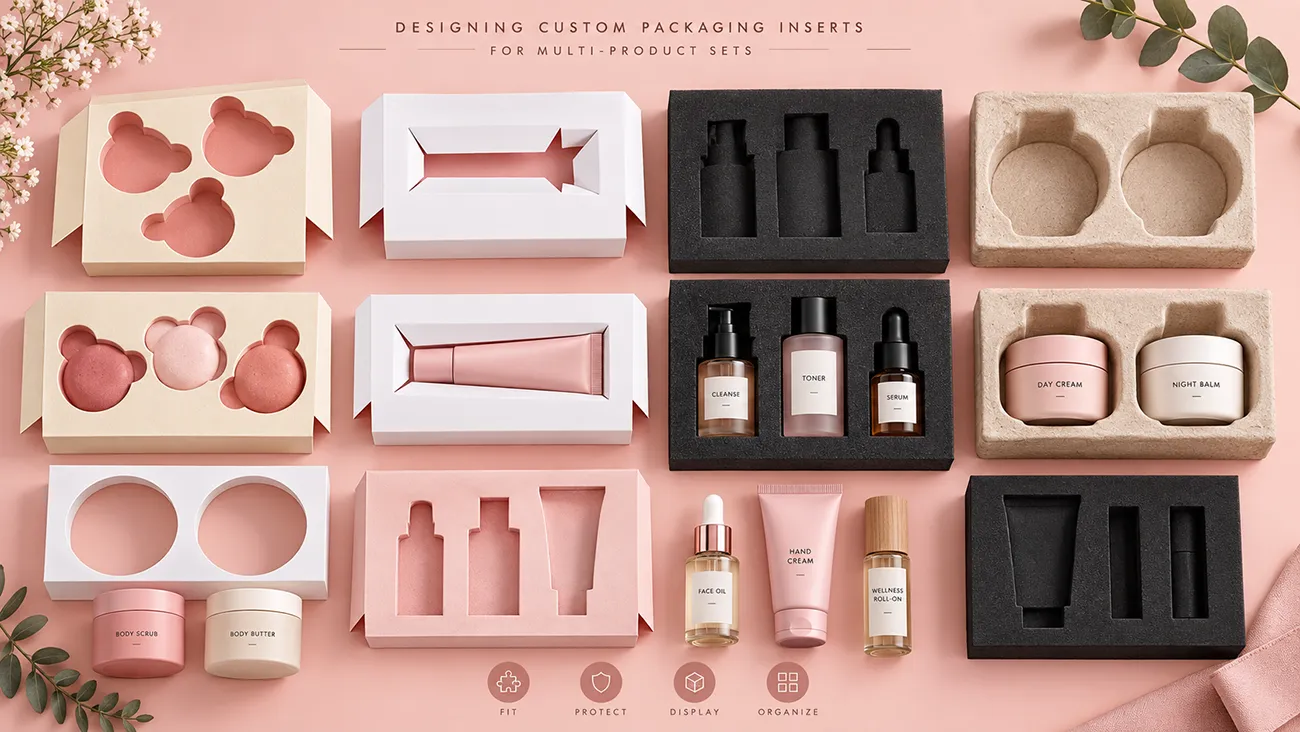
1. Structure and Fit: Preventing Product Shifting
The primary function of a custom insert is to securely hold products in place. First, clearly inventory all items in the set—considering bottle dimensions, shapes, weights, and quantities. Cavity dimensions must be measured precisely; if too loose, products will rattle, and if too tight, they will be difficult to remove. For export goods, additional reinforcement is necessary to withstand long-haul logistics handling and warehouse stacking pressure.
2. Material Selection and Export Compliance
For cross-border brands targeting the EU market, paper-based inserts are the preferred choice. Recycled paper, FSC-certified paperboard, and kraft paper are common options. Avoid unnecessary plastic liners to ensure compliance with the EU Packaging and Packaging Waste Regulation (PPWR). Material thickness depends on product weight: lightweight cosmetics can use 250–350gsm paperboard, whereas heavier glass bottles require sturdier, thicker paperboard inserts. Always verify material certifications to pass customs and compliance checks.
3. Functionality and Branding Details
An insert is more than just a securing mechanism. Instructions, brand information, QR codes, or subtle debossed logos can be printed directly onto the paper insert. Consider the assembly speed for logistics teams; simple, foldable inserts can reduce packaging labor costs. Always test the ease of product removal, especially for gift sets intended for retail customers.
4. Prototyping, MOQ, and Pre-shipment Quality Control
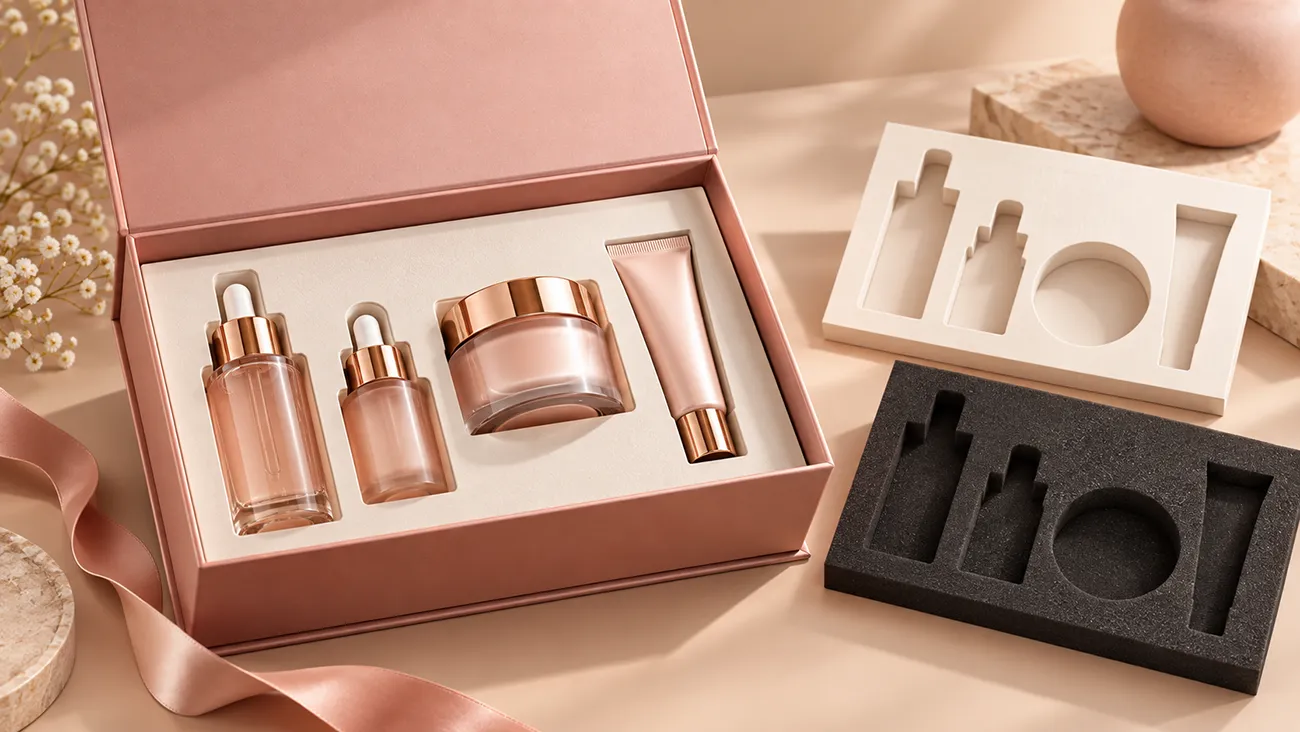
Before mass production, always request a physical pre-production sample for verification. Many manufacturers set high Minimum Order Quantities (MOQs), making it difficult to test different insert designs when launching new sets. It is crucial to verify fit, die-cutting precision, and material quality during the prototyping stage to avoid costly, large-scale rework.
Brand Advantages
Designing secure, compliant inserts for multi-product sets requires expertise in both structural engineering and printing processes. Crown Win Packaging’s design team specializes in creating custom inserts for beauty, wellness, and gift sets. We offer FSC-certified paper options, comprehensive die-cutting tests, and pre-production prototyping for export orders. Our factory supports small-batch orders (low MOQs) for testing purposes and implements rigorous pre-shipment quality control to ensure reliable lead times, while providing full documentation to meet EU packaging regulations. We help brands strike a balance between product protection, sustainability, and a premium unboxing experience, avoiding excessive packaging designs.
Conclusion
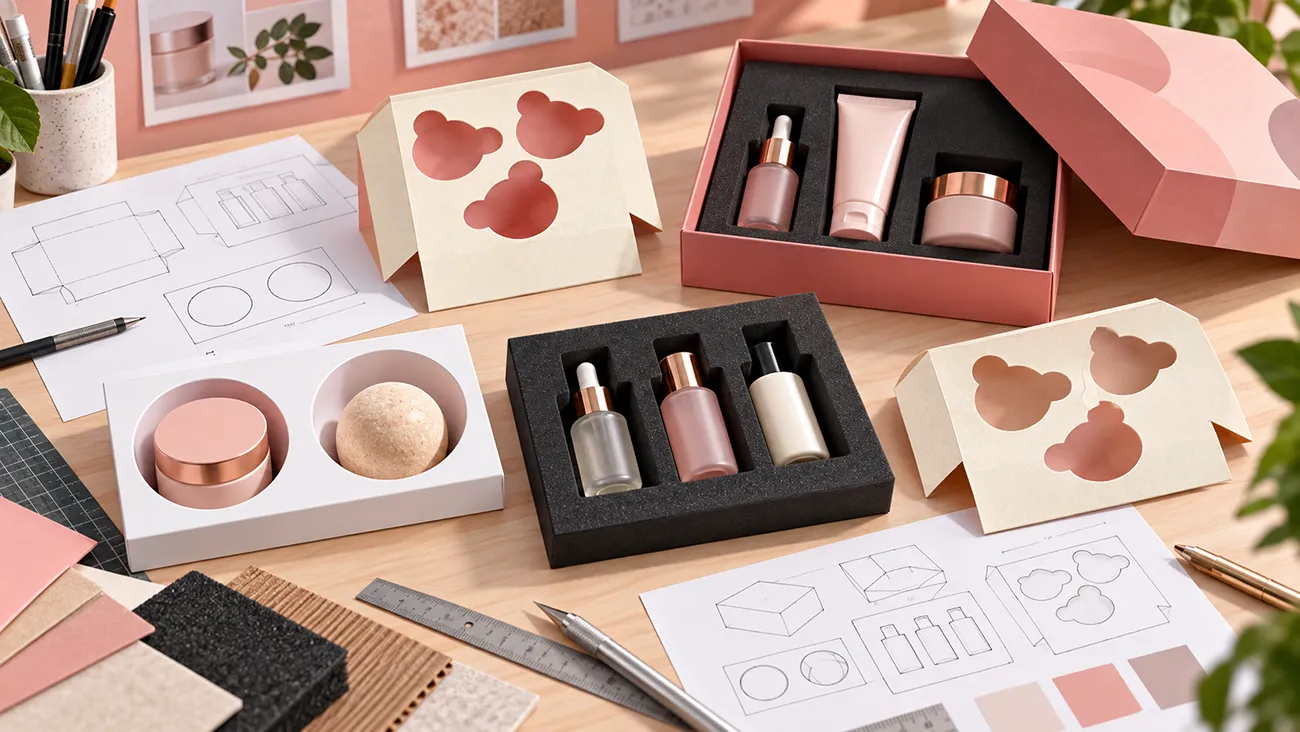
A well-designed custom insert not only protects your multi-product set but also streamlines the fulfillment process and creates a memorable unboxing experience. Precise measurements, the selection of eco-friendly materials, and pre-production prototyping are essential steps before mass production.
You may also want to read our related blog post, "Wholesale Custom Paper Bags with Logos: Key Requirements for Retail Buyers," for further guidance on bulk packaging procurement.
If you are designing inserts for multi-product sets, please send your product dimensions and set specifications to our team for a free design consultation and a prototyping quote.
 How to Design Packaging for Wholesale Buyers?