


 Crown Win
The product arrives intact, but the gift box has a crushed corner and a crease across the lid. For a gift set or a retail display, that can make the unit unsuitable for sale. Before ordering a thicker gift box, check where the damage appeared and how the box was packed.
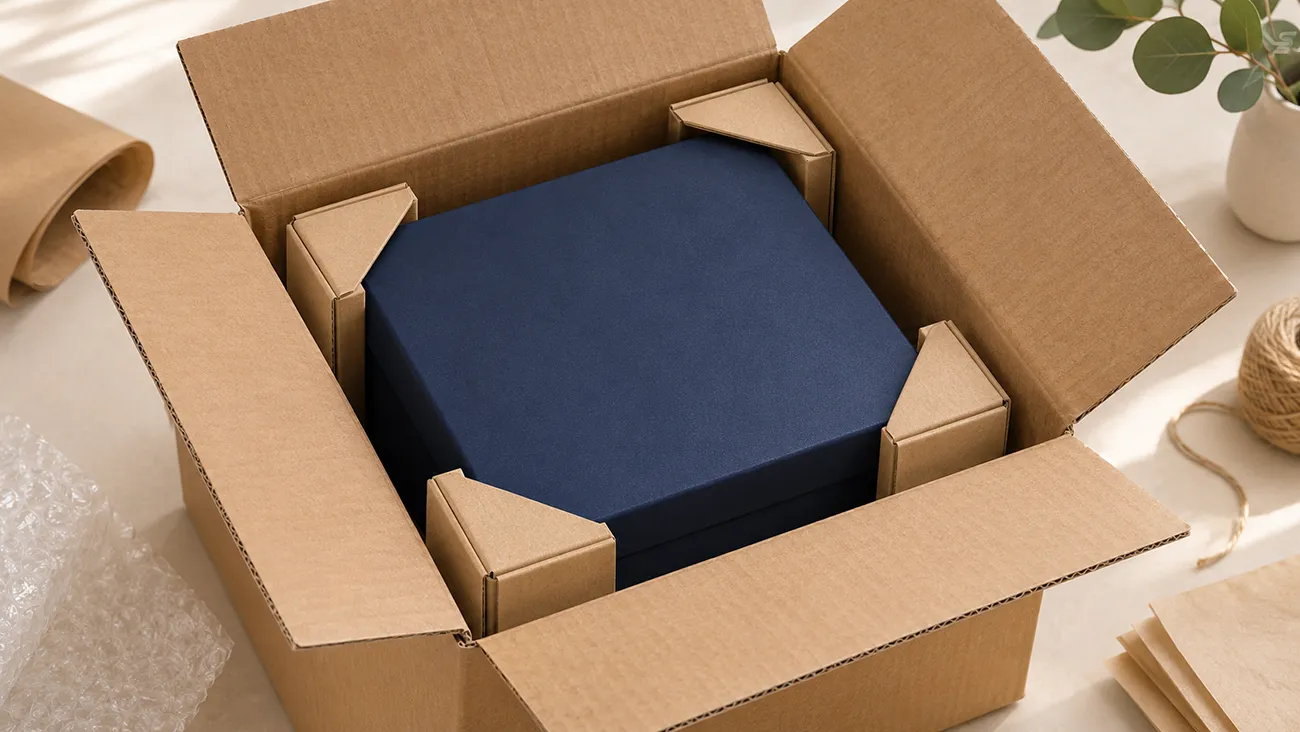
To protect gift box corners during shipping, check the complete shipment: the product and insert, the gift box, and the shipping carton with its cushioning. A dent can come from contact with the outer carton, pressure between boxes in a bulk shipment, or a product pressing against the lid. Each calls for a different adjustment.
1. Use the damage pattern to decide what to check
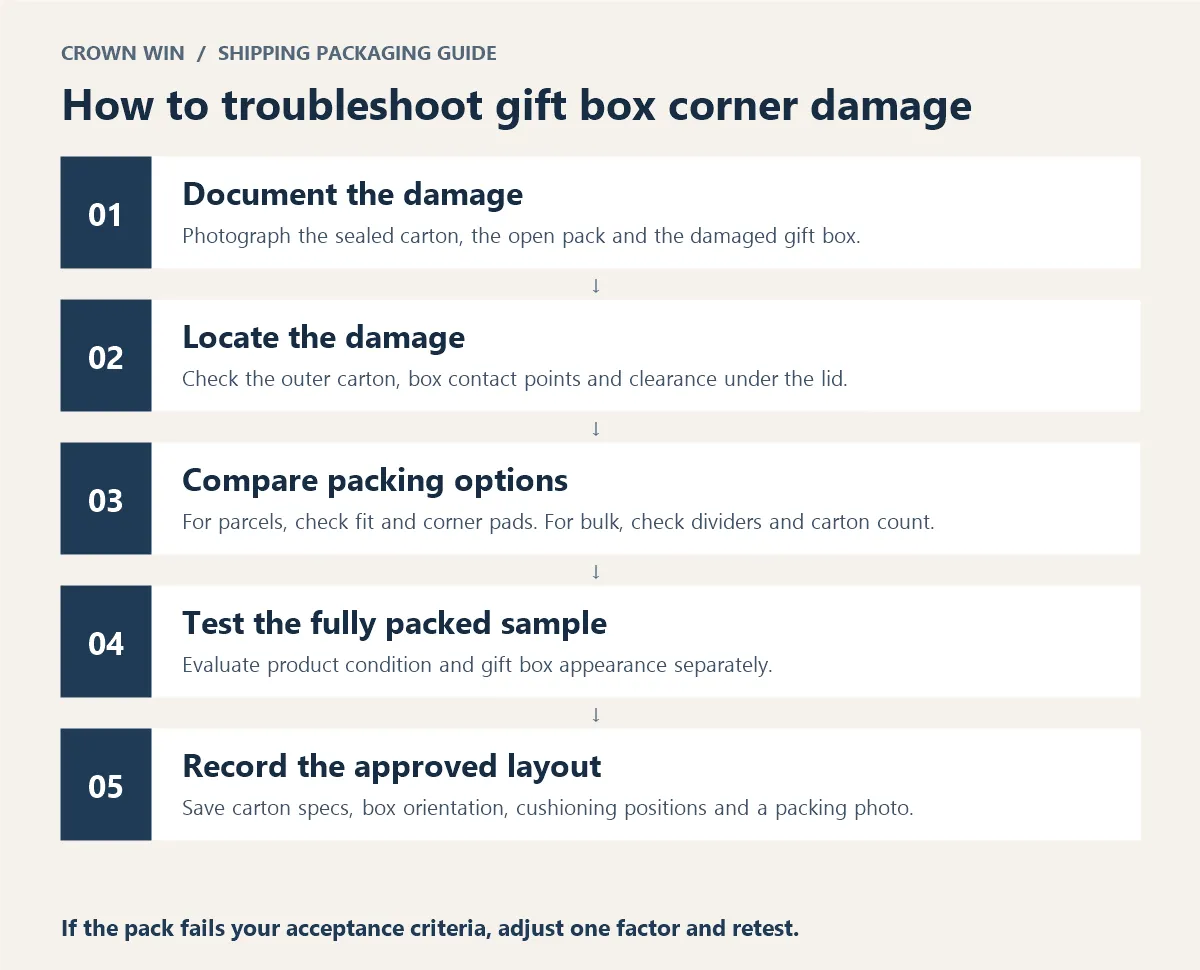
Ask the recipient to photograph the sealed parcel, the contents immediately after opening, and the damage to the gift box. For a bulk shipment, also record where each damaged unit sat: in a corner, against a wall, on the bottom layer or in the center.
- The outer carton and gift box are crushed at the same corner. Check how close the gift box sat to that corner, whether the cushioning shifted, and whether the shipping carton is suitable for the packed load.
- The outer carton looks intact, but several gift boxes have dents in the same spot. Check whether the boxes were packed too tightly, whether the dents line up with a divider or another box, and whether the marks were already present before sealing.
- The lid bulges or has a mark directly above the product. Check whether the product and insert leave enough clearance for the lid to close. Review the difference between internal and external box dimensions before changing the shipping carton.
Damage patterns help narrow down the cause. If the problem appears only on one route or with one order type, record that detail so you can reproduce the packing setup you need to check.
2. Compare the packing options for single parcels and bulk shipments
For an individual parcel, check whether the gift box can slide inside the carton or sit directly against an outer corner. Compare a closer-fitting carton with a setup that uses pads or corner protectors to hold the gift box in place. When comparing custom corrugated shipping boxes, use the dimensions of the gift box with its planned cushioning in place. Close the carton as the warehouse would and check that the protection stays in position without pressing into the lid or rubbing the printed surface.
For a bulk shipment, pack one master carton with the planned number of gift boxes. Inspect units against the carton walls and on the bottom layer as well as those in the middle. If the boxes rub against each other or shift, compare a divider, a layer pad or a different quantity per carton. Ask the supplier to confirm the carton dimensions, gross weight and packing layout so the warehouse can repeat the setup.
If only the boxes along one wall arrive scuffed, start by separating those boxes from the wall. Changing one part of the pack at a time makes it easier to tell which adjustment helped.
3. Test a fully packed sample and agree on what counts as damage
Use the actual product, insert, gift box, cushioning and shipping carton. Seal the carton using the method planned for shipment. An empty gift box leaves out the weight and movement of the contents, so it cannot tell you how the complete pack will perform.
Agree on acceptance criteria before testing. For example, you might accept a light rub mark on the shipping carton but reject a visibly crushed gift-box corner, a lid that no longer sits flush or a scuff on the front panel. Record the condition of the product and the gift box separately. An intact product does not mean the gift box is still suitable for display or gifting.
If your retailer or fulfillment program specifies a test, follow that requirement. Otherwise, consult the ISTA transport packaging test procedures and ask a packaging test lab which procedure fits your distribution route and shipment type. A trial shipment can provide feedback for that route, but it does not replace formal testing when required.
4. Approve the carton layout along with the gift box
Once you select a packing setup, record the carton specification, number of boxes per carton, their orientation, the position of any cushioning and the sealing method. Take a photo before closing the carton and keep it with the approved gift-box sample. The factory and warehouse can then use the same reference when packing the next order.
If the gift box dimensions, packed weight or shipping route change on a reorder, check whether the approved layout still applies.
Planning a custom gift box order? Contact Crown Win for a packaging quote and share the packed dimensions and weight, shipping method, expected units per carton and photos of any recurring corner damage. Tell us whether the gift boxes will ship individually or in bulk so we can discuss what to check during sampling.
 How to Check Retail Barcodes on Packaging Before Production